
China
The Kaifeng Jews are descendants of a Jewish community that settled in China over 1,000 years ago, likely arriving via the Silk Road during the Northern Song Dynasty. They built a synagogue in Kaifeng in 1163 and maintained Jewish practices—including kosher laws, Shabbat, and festivals—for centuries, even as they gradually assimilated into Chinese society. Without a continuous influx of Jewish leadership or access to Hebrew texts, their religious knowledge faded over time, and by the 19th century, the synagogue was destroyed and formal Jewish life had all but disappeared. Still, many families retained a strong sense of Jewish identity, preserving oral traditions and family lore. Today, a small number of Kaifeng descendants are working to reclaim their heritage, supported by international Jewish organizations and researchers. Despite political sensitivities and challenges in accessing formal conversion or emigration, their efforts reflect a deep, resilient connection to their ancestry.
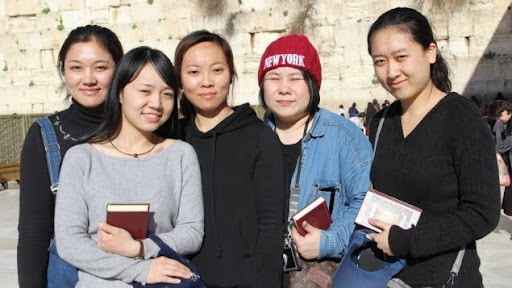
Young women from Kaifeng who made aliyah (courtesy of Shavei Israel)
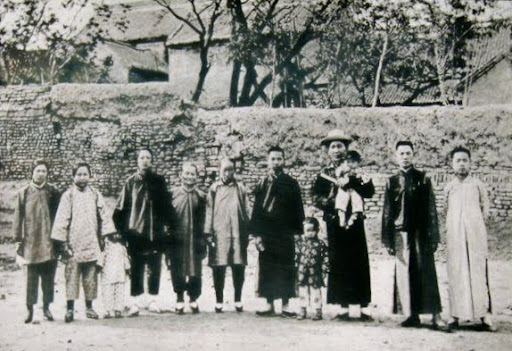
Jewish attendees of a conference in Kaifeng, 1919
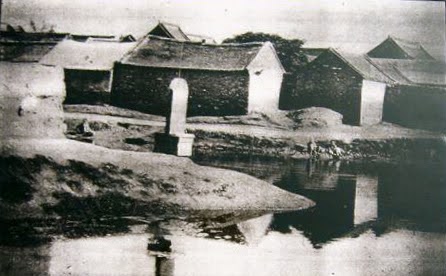
A memorial stone at the edge of a lake in Kaifeng

Location
Kaifeng

Community size
500–1000

Languages
Mandarin

Kulanu Support Since
2009
Discover China
A Synagogue in the Heart of Imperial China
The Kaifeng Jewish community built its first synagogue in 1163, during the Northern Song Dynasty, just a short distance from the imperial palace. Rebuilt several times over the centuries due to repeated flooding of the nearby Yellow River, the synagogue was a center of worship, education, and communal life until it was destroyed in the 1850s. Its layout followed traditional Chinese architectural principles, with courtyards, pagoda-style roofing, and stone steles inscribed in both Hebrew and Chinese. The Torah ark and mikveh were seamlessly incorporated into this Chinese aesthetic, reflecting the community’s deep integration with local culture while preserving their religious identity.
Family Names with Jewish Roots
Several Kaifeng families still carry Chinese surnames that trace back to their Hebrew origins, adapted centuries ago to integrate into local society. Scholars have identified these names as transliterations of biblical figures: Ai (from Eliyahu or Eliyahu), Shi (from Shimon), Gao (possibly from Cohen), Jin (from Yehuda), Li (from Levi), Zhang (from Zebulun), and Zhao (from Reuven or Yitzhak). These names, passed down for generations, are one of the clearest surviving links to their Jewish ancestry and remain a source of identity and pride among Kaifeng descendants.
Global Jewish Community with Kulanu
Since 2009, Kulanu has played a role in reconnecting Kaifeng’s descendants with the broader Jewish world. Through educational materials, religious items, and community-building support, Kulanu has helped individuals in Kaifeng learn about Jewish traditions that many had only heard of in family stories. The organization has also advocated for the community globally, raising awareness about their unique history and modern challenges. In a country where formal recognition and access to Jewish institutions are limited, Kulanu nurtures Jewish identity, continuity, and hope.