
Ecuador
In the heart of the Andes, amid the vibrant streets of Quito and the coastal city of Guayaquil, a remarkable Jewish revival is quietly flourishing. This is not the story of Jews returning from exile—it is the story of descendants of Bnei Anousim, “forced ones” whose ancestors were coerced into abandoning their Jewish identity during the Spanish Inquisition, now reclaiming their heritage with passion and conviction. It is also the story of former Evangelicals and Messianic seekers, who, upon deeper spiritual reflection, chose to embrace the tenets of traditional Judaism—turning their backs on Christian theology and beginning anew.
In recent years, grassroots efforts and support from Kulanu have helped these communities blossom, despite being largely unacknowledged by Ecuador’s mainstream Jewish institutions. From offering Hebrew education to facilitating global connections, Kulanu has been a lifeline to this emerging Jewish landscape. The perseverance and sincerity of Ecuador’s new Jewish communities speak to a powerful narrative of resilience, renewal, and the enduring pull of Jewish identity.

Location
Quito, Guayaquil, Cuenca

Languages
Spanish

Community size
~40

Kulanu Support
2014
Discover Ecuador
Echoes of the Past: Rediscovering Jewish Roots
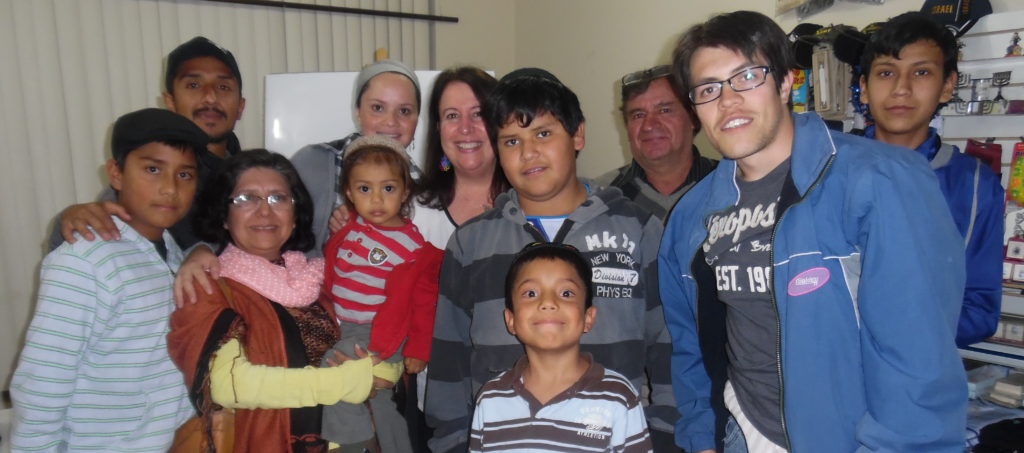
The majority of the community members in Quito’s “La Comunidad” believe they are descended from Bnei Anousim—Jews forced to convert to Catholicism during the Inquisition who nevertheless retained fragments of Jewish practice in secrecy. Others are former Christian ministers or Messianic believers who found their way to Judaism through study, introspection, and a deep yearning for spiritual authenticity. This diverse yet unified group came together in the 2010s under the leadership of Yosef Franco, a charismatic lay leader originally from El Salvador, who now leads prayers and Torah classes from the ground floor of his home—now a modest yet vibrant Sephardic synagogue.
A Community of Diversity and Devotion
While Quito remains the nucleus of this revival, with about 40 active members in the Kennedy neighborhood, other communities are taking root across Ecuador—from Guayaquil’s egalitarian Shtibel Igualitaria to clusters of believers in Cuenca and beyond. In Quito, spiritual life is rich and routine: Friday evenings are spent in intimate home gatherings, Saturday mornings in synagogue with prayer and Torah reading, followed by shared meals and learning. The community operates with a Sephardic Orthodox ethos, with white plastic chairs arranged around a central bima, voices raised in song and study, and children joining their parents in intergenerational learning.
The Kulanu Connection: A Lifeline of Support and Solidarity
Kulanu’s partnership has been pivotal in Ecuador’s Jewish resurgence. From helping to secure a Sephardic Torah for the Quito synagogue to funding modest grants and educational resources, the organization has bridged distance with meaningful engagement. One of the most transformative contributions came in the form of people: Kulanu volunteer and Hebrew educator Elana Gerson, for instance, spent weeks teaching Hebrew in Quito. Her presence brought not only language skills but a profound sense of connection and validation. Under her guidance, children and grandparents alike mastered Hebrew reading in mere sessions—an astonishing testament to their drive.